
Why Insurance Companies Are Quietly Becoming Market Winners
Introduction
While investors have focused heavily on technology stocks, artificial intelligence, and high-growth sectors, another group has been quietly delivering strong financial performance: insurance companies.
Higher interest rates, improving investment income, disciplined underwriting, and resilient demand have created favorable conditions for insurers. As a result, many insurance companies are generating stronger profits, healthier balance sheets, and growing shareholder returns.
The question is whether this trend can continue in the years ahead.
Higher Interest Rates Are Changing the Game
Insurance companies collect premiums today and invest those funds until claims need to be paid in the future.
For years, ultra-low interest rates limited the returns insurers could earn on their investment portfolios. However, the higher-rate environment has significantly improved yields on bonds and fixed-income securities.
This means insurers can generate more investment income without taking additional risk, boosting overall profitability.
Investment Income Is Becoming a Major Growth Driver
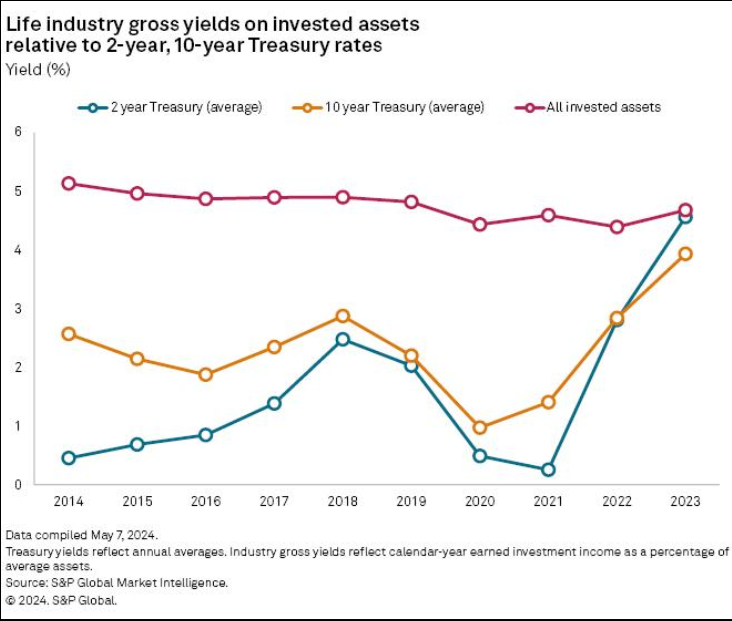
Unlike many businesses that struggle with higher interest rates, insurers often benefit from them.
Large insurance companies hold billions of dollars in government bonds, corporate debt, and other fixed-income assets. As older securities mature and are replaced with higher-yielding investments, portfolio income increases.
This creates a powerful earnings tailwind that could support profitability for years.
Pricing Power Has Improved
Many insurance providers have successfully increased premiums to offset inflation, higher repair costs, and rising claim expenses.
Whether in property and casualty insurance, commercial insurance, or specialty markets, companies have shown an ability to pass higher costs on to customers.
Strong pricing power helps protect profit margins even during periods of economic uncertainty.
Strong Balance Sheets Matter
Insurance companies are heavily regulated and generally maintain substantial capital reserves.
Many industry leaders entered the current economic environment with strong balance sheets, allowing them to absorb market volatility while continuing to invest, pay dividends, and repurchase shares.
In uncertain markets, financial strength often becomes a competitive advantage.
The Aging Population Trend

Demographic trends may provide another long-term growth opportunity.
As populations age across North America and many developed economies, demand for retirement products, life insurance, annuities, and wealth protection services is expected to grow.
This creates a structural demand driver that extends well beyond the current economic cycle.
Why Investors Are Paying Attention
Insurance companies often combine several characteristics investors value:
- Consistent cash flow
- Dividend income
- Strong balance sheets
- Pricing power
- Exposure to higher interest rates
- Long-term demographic tailwinds
These qualities can be particularly attractive during periods of market volatility.
Risks Investors Should Watch
The insurance industry is not risk-free.
Natural disasters, catastrophic weather events, regulatory changes, investment portfolio losses, and unexpected claim costs can pressure profitability.
In addition, a sharp decline in interest rates could reduce one of the sector’s most important earnings advantages.
Investors should therefore focus on underwriting discipline, capital strength, and long-term management execution.
What It Means for Investors
The insurance sector may lack the excitement of high-growth technology stocks, but its business model is becoming increasingly attractive in today’s environment.
Companies that combine strong underwriting performance with growing investment income may continue delivering steady earnings growth and shareholder returns.
For long-term investors, insurance stocks could represent one of the market’s most overlooked opportunities.
Conclusion
Insurance companies are benefiting from a combination of higher interest rates, rising investment income, pricing power, and favorable demographic trends.
While they may not generate the headlines of faster-growing sectors, their ability to produce stable cash flows and consistent profitability has made them increasingly attractive to investors.
In a market focused on the next big story, insurance companies may be quietly emerging as some of the biggest winners.