Geopolitical Risk Premium: How War Fears Are Driving Market Swings
Introduction
Global financial markets are increasingly being shaped not just by economic fundamentals, but by geopolitical developments. From escalating tensions in the Middle East to strategic competition between major powers, war risks and political instability are now a key driver of market volatility.
At the center of this shift lies the concept of the geopolitical risk premium — the additional cost investors demand to compensate for uncertainty arising from conflict, sanctions, and global instability.
What Is a Geopolitical Risk Premium?
A geopolitical risk premium reflects the extra pricing embedded into assets due to uncertainty. It is not driven by actual economic deterioration, but by the possibility of disruption.
This premium manifests across markets:
- Oil prices rise on fears of supply disruption
- Gold and safe-haven assets gain as investors seek protection
- Equities experience volatility due to uncertainty in earnings outlooks
- Currencies shift toward safe-haven flows such as the U.S. dollar
Importantly, this premium can emerge rapidly — often triggered by headlines rather than confirmed events.
Why Geopolitics Matters More Today
1. Concentration of Critical Resources
Energy and commodity supply chains are geographically concentrated. Regions prone to geopolitical tension often control critical resources such as oil, natural gas, and key minerals.
This creates an environment where localized conflict can have global economic consequences.
2. Fragile Global Supply Chains
Globalization has optimized efficiency but reduced resilience. Supply chains are now more vulnerable to disruption from sanctions, trade restrictions, and military conflicts.
As a result, markets react quickly to even the threat of disruption, not just actual events.
3. Financial Market Integration
Modern financial systems are deeply interconnected. Capital flows respond instantly to geopolitical developments, amplifying volatility across asset classes.
This increases the speed and magnitude of market reactions.
How War Fears Translate Into Market Movements
Energy Markets
Oil prices are typically the most sensitive to geopolitical developments. The mere risk of supply disruption in key regions can lead to immediate price spikes.
Precious Metals
Gold often acts as a hedge against uncertainty, benefiting from increased demand during periods of geopolitical stress.
Equity Markets
Stock markets tend to become volatile, with investors rotating away from risk assets toward defensive sectors.
Currency Markets
Safe-haven currencies, particularly the U.S. dollar, strengthen as global investors seek stability.
Temporary Shock or Structural Shift?
A key question for investors is whether geopolitical risk premiums are short-lived reactions or part of a longer-term structural change.
Short-Term Perspective
Historically, many geopolitical shocks have led to temporary market disruptions, with prices stabilizing once tensions ease.
Structural Perspective
However, the current global environment suggests a more persistent trend:
- Increasing geopolitical fragmentation
- Rising frequency of regional conflicts
- Strategic competition over energy and technology
This implies that geopolitical risk may become a permanent feature of market pricing, rather than an occasional disruption.
Implications for Investors
Higher Volatility Regime
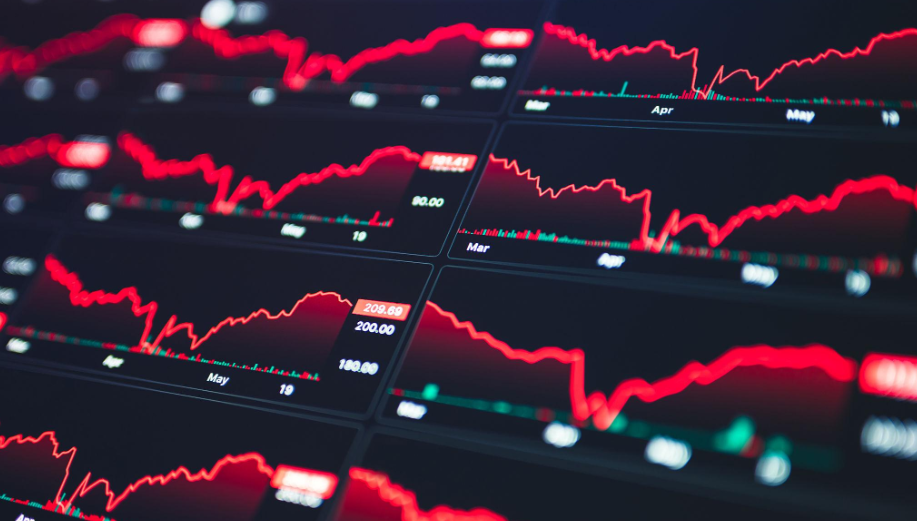
Markets may experience more frequent and sharper price movements as geopolitical risks evolve.
Sectoral Divergence
Energy, defense, and commodities may benefit during periods of heightened tension, while consumer-driven sectors may face pressure.
Importance of Risk Management
Investors may need to incorporate geopolitical analysis into their frameworks, rather than relying solely on economic indicators.
Conclusion
The growing influence of geopolitical risk reflects a fundamental shift in the global economic landscape. Markets are no longer driven solely by growth, inflation, and monetary policy — they are increasingly shaped by uncertainty, conflict, and strategic competition.
The geopolitical risk premium is not just a short-term phenomenon. It represents a deeper transformation in how markets price risk.
Understanding this dynamic is essential for navigating today’s volatile financial environment, where headlines can move markets as much as fundamentals.