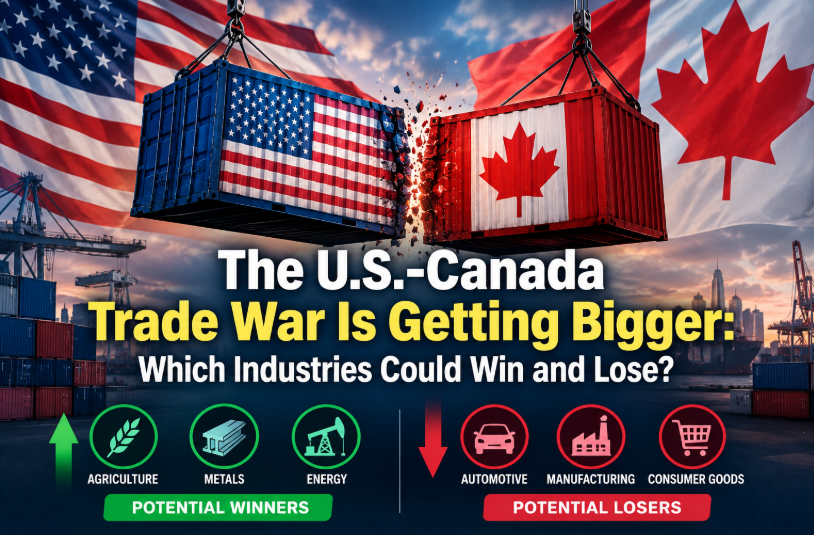
The U.S.-Canada Trade War Is Getting Bigger: Which Industries Could Win and Lose?
A New Phase in North American Trade
Trade tensions between the United States and Canada have escalated sharply. After negotiations broke down, President Donald Trump threatened to raise tariffs on Canadian cars, trucks, automotive parts and steel to 50% from January 1, 2027. Canada has also announced retaliatory measures on selected U.S. goods beginning September 8.
The development matters because the U.S. and Canada have deeply integrated supply chains. A prolonged trade conflict could therefore affect manufacturing, autos, steel, agriculture, transportation and consumer prices on both sides of the border.
Auto Industry: The Biggest Loser?
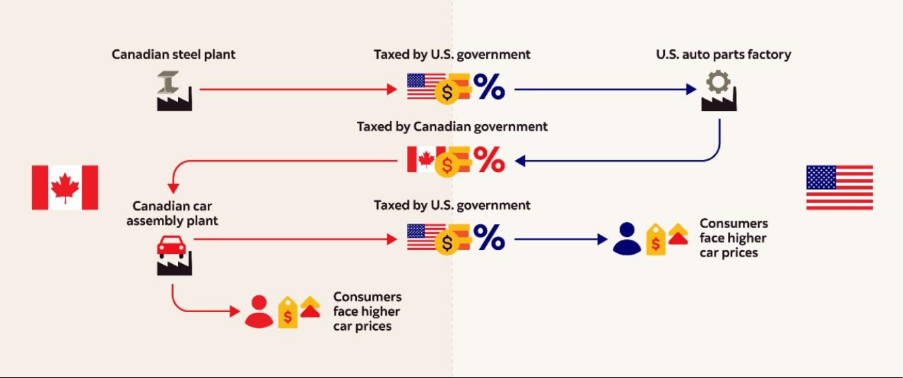
The automobile industry may be among the most exposed sectors.
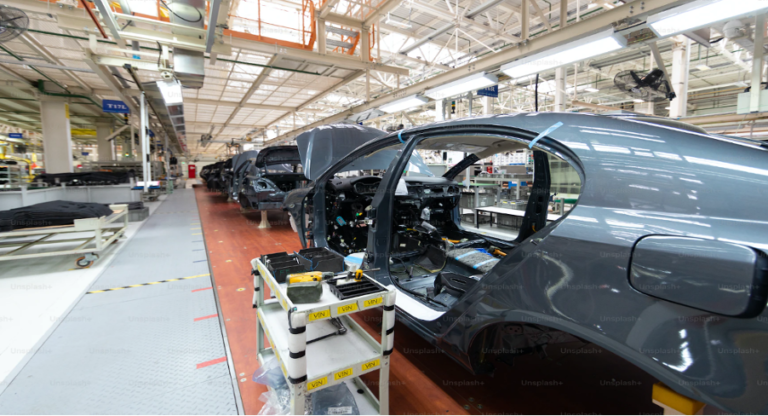
Canadian plants and U.S. factories depend on cross-border movement of vehicles, engines, components and parts. Higher tariffs could increase production costs and make North American vehicles more expensive.
Canadian auto-parts companies have already faced investor pressure following the latest escalation, while analysts warn that prolonged tariffs could disrupt the integrated North American auto supply chain.
Potential losers: Canadian auto manufacturers, parts suppliers and companies heavily dependent on cross-border production.
U.S. Steel Could Benefit
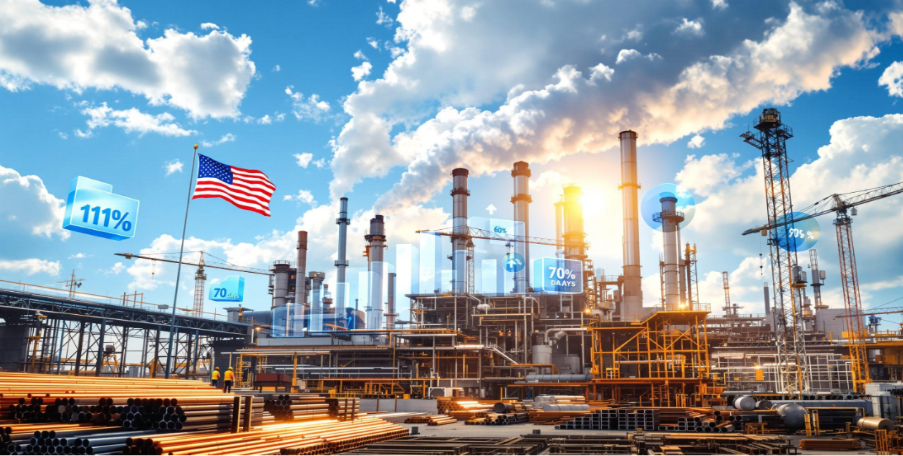
Steel is one of the clearest examples of a potential short-term winner.
Higher tariffs on Canadian steel can reduce competition from Canadian suppliers and support domestic U.S. producers. Recent market reactions have already highlighted gains for some American steelmakers as investors anticipate reduced Canadian competition.
However, there is a catch: U.S. manufacturers that use steel as an input could face higher costs.
So the benefit for steel producers could come at the expense of construction, machinery and other industries.
Transportation Could Feel the Pressure
Cross-border trucking and logistics companies face another challenge: weaker trade volumes and increased uncertainty.
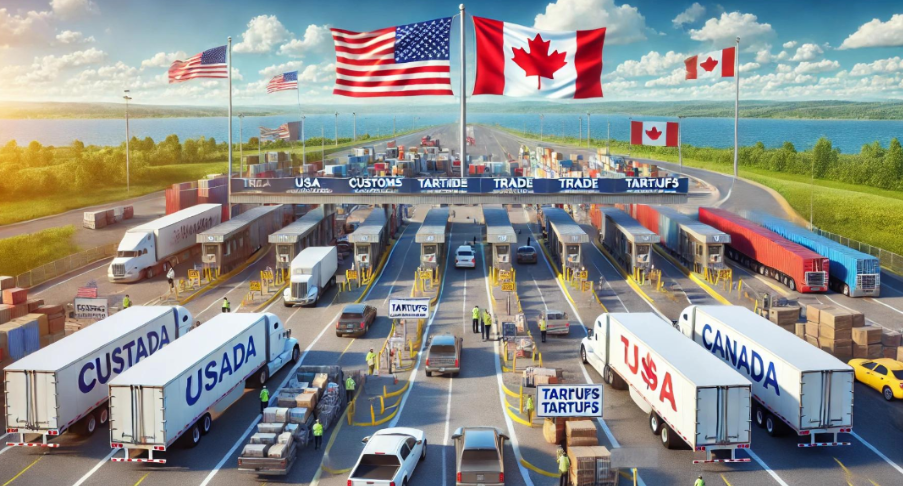
Transportation stocks already reacted negatively to the latest escalation, with several major U.S. trucking companies falling as investors worried about weaker cross-border freight activity.
If tariffs remain elevated, companies may redesign supply chains, reduce shipments or shift sourcing—creating additional volatility for freight operators.
Agriculture and Food Could Be Hit From Both Sides
Agriculture is another sensitive area because Canada and the U.S. are major trading partners for food and agricultural products.
Retaliatory tariffs could reduce demand for U.S. agricultural exports while higher import costs could raise prices for Canadian consumers.
The risk is particularly important because agricultural producers cannot always pass higher costs directly to customers.
Who Could Ultimately Win?
The winners may be concentrated rather than broad.
Potential beneficiaries:
- U.S. steel producers
- Domestic manufacturers protected from Canadian competition
- Some U.S. agricultural and industrial suppliers if Canadian demand shifts toward domestic alternatives
- Companies able to rapidly localize their supply chains
Potential losers:
- Auto manufacturers and parts suppliers
- Cross-border trucking companies
- Canadian exporters
- U.S. manufacturers dependent on Canadian inputs
- Consumers facing higher prices
The Bank of Canada has already found that Canadian steel, aluminum, lumber and motor-vehicle exports have declined following earlier trade restrictions.
The Bigger Investment Question
The real issue is whether tariffs remain temporary or become a permanent restructuring of North American supply chains.
If companies begin moving production, sourcing components domestically and redesigning logistics networks, the economic consequences could extend well beyond the current tariff cycle.
For investors, that means looking beyond the headline tariff rate and asking:
Which companies have pricing power, diversified supply chains and the balance sheet to absorb higher costs?
Conclusion
The U.S.-Canada trade conflict is becoming more than a political dispute. It is increasingly an industrial and investment story.
U.S. steel producers could benefit, while autos, transportation and cross-border manufacturers face greater pressure. But there may be no true winner if tariffs ultimately increase production costs and consumer prices across North America.
The biggest investment opportunity may therefore come not from simply betting on “winners,” but from identifying companies capable of adapting faster than their competitors.
For investors, the next few months could reveal whether North America is heading toward temporary trade friction—or a fundamental restructuring of its economic relationship.