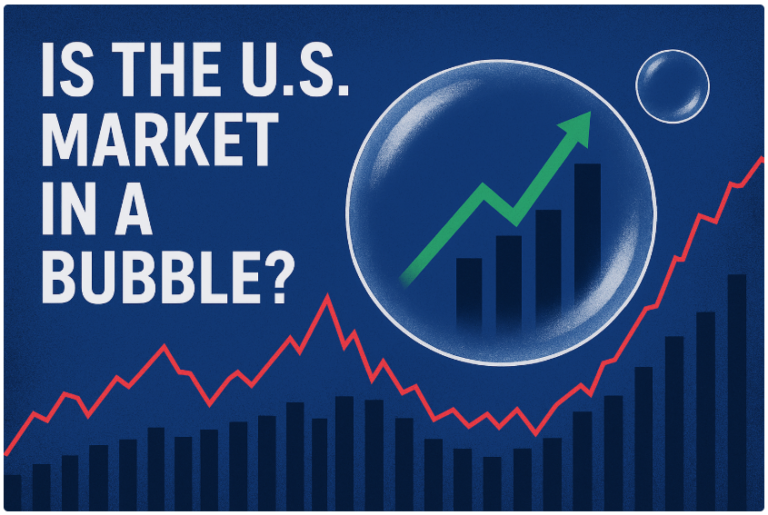
The Great Market Disconnect: Why Stocks Are Rising While Risks Are Increasing
Markets Continue to Climb
Global equity markets continue to push higher, supported by strong momentum in technology stocks, optimism surrounding artificial intelligence, and expectations that economic growth will remain resilient. Despite persistent concerns about inflation, interest rates, and geopolitical tensions, investor sentiment has remained remarkably positive.
Yet beneath the surface, a growing disconnect is emerging between market performance and the broader macroeconomic environment.
Economic Risks Haven’t Disappeared
While stock indices remain near record highs, several key risks continue to challenge the global economy. Inflation remains above central bank targets in many regions, bond yields have moved higher, and economic growth is showing signs of moderation.
At the same time, geopolitical tensions, elevated government debt levels, and uncertainty around future monetary policy continue to create headwinds for investors.
These risks have not disappeared—they have simply been overshadowed by market optimism.
The AI Effect
One of the primary drivers behind recent market gains has been enthusiasm surrounding artificial intelligence. Investors are increasingly willing to pay premium valuations for companies expected to benefit from AI-driven growth.
The expectation is that artificial intelligence will boost productivity, drive earnings growth, and create new economic opportunities. While this thesis may ultimately prove correct, current market performance suggests investors are already pricing in a significant portion of those future benefits.
Rising Bond Yields Tell a Different Story
While equities remain strong, bond markets are sending a more cautious message.
Long-term bond yields have remained elevated as investors reassess inflation expectations and the likelihood of future rate cuts. Higher yields generally reflect tighter financial conditions and increased concern about inflation, fiscal deficits, or long-term economic uncertainty.
This divergence between stocks and bonds raises an important question: which market is pricing the future more accurately?
Valuations vs Reality
Strong market performance has pushed valuations higher, particularly within large-cap technology companies. However, earnings growth across many sectors has not kept pace with the optimism reflected in stock prices.
If economic growth slows further or corporate profits disappoint, investors may begin to question whether current valuations fully reflect underlying risks.
Markets often move ahead of fundamentals, but history shows that expectations eventually need to be supported by real economic and financial performance.
Why Investors Should Pay Attention
A market disconnect does not necessarily mean a correction is imminent. Markets can remain optimistic for extended periods, particularly when supported by strong liquidity and positive sentiment.
However, periods of extreme confidence often reduce investors’ sensitivity to risk. When expectations become elevated, even minor disappointments can trigger increased volatility.
Understanding the gap between market enthusiasm and economic reality is therefore essential for long-term investors.
Conclusion
The current market environment is defined by a growing contrast between strong equity performance and persistent macroeconomic risks. AI-driven optimism, resilient corporate earnings, and investor confidence continue to support stocks, while inflation concerns, higher bond yields, and geopolitical uncertainty remain in the background.
The key question is not whether risks exist—they clearly do. The question is whether markets are adequately pricing them.
As investors navigate the second half of 2026, the sustainability of the rally may depend less on optimism and more on whether economic fundamentals can eventually justify the expectations embedded in current market valuations.