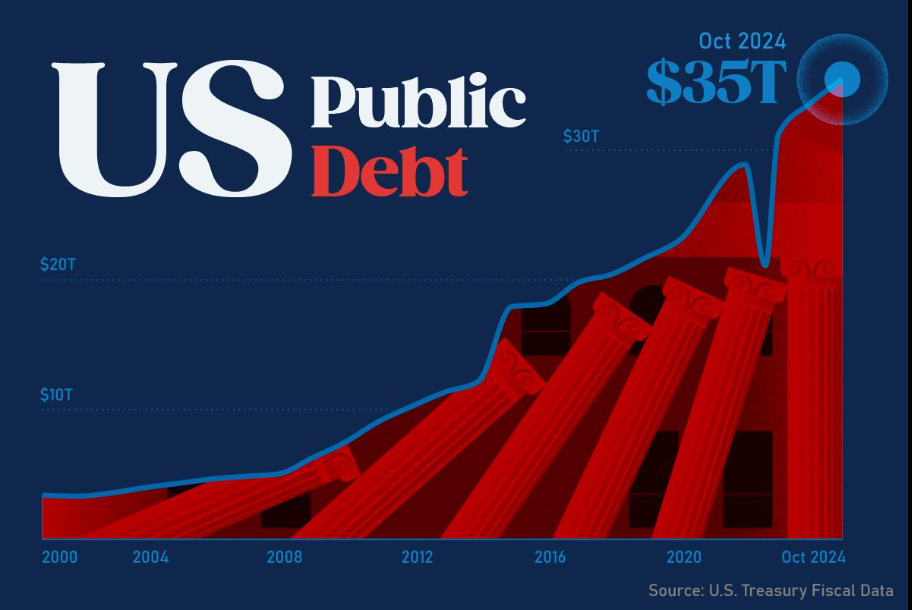
America’s Debt Problem: Can Rising Deficits Continue to Support Growth?
Introduction
The United States has long relied on fiscal spending to support economic growth, stimulate demand, and respond to crises. However, persistent budget deficits and a rapidly expanding national debt have raised an important question for investors: Can America continue financing growth through borrowing, or is the current path becoming increasingly unsustainable?
While deficit spending has helped support employment, infrastructure, and economic resilience, the long-term consequences of rising debt are becoming more difficult to ignore.
America’s Debt Continues to Climb
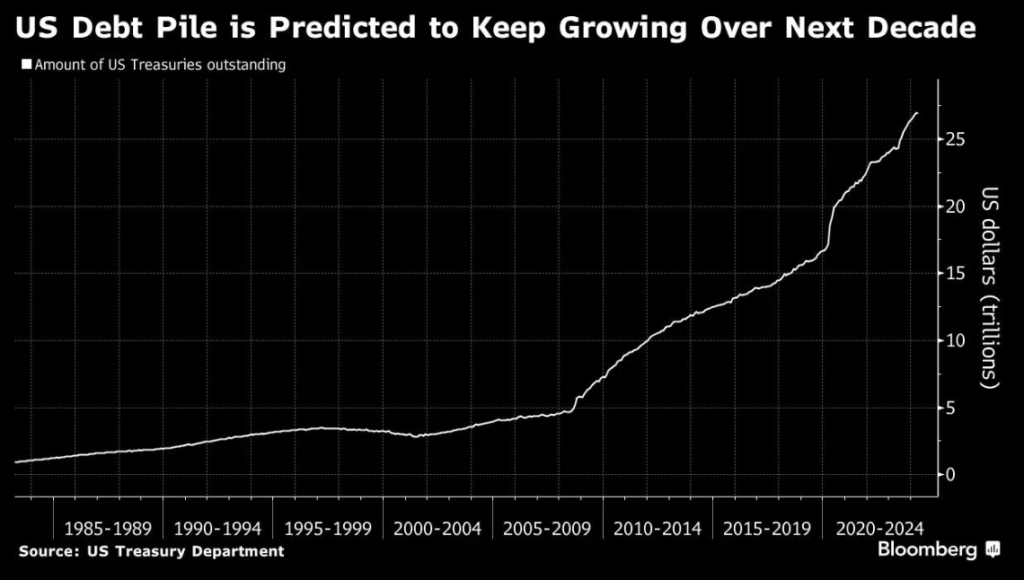
The U.S. federal debt has expanded significantly over the past two decades due to tax cuts, higher entitlement spending, economic stimulus programs, and rising interest costs.
Today, annual budget deficits remain elevated even during periods of economic expansion. As borrowing increases, the government must issue more Treasury securities, placing greater pressure on public finances and increasing future debt-servicing obligations.
Growing debt does not automatically trigger a crisis, but it does reduce fiscal flexibility during future economic downturns.
Why Markets Haven’t Reacted More Aggressively

Despite record debt levels, U.S. Treasury securities remain among the world’s safest and most liquid assets.
The U.S. dollar continues to serve as the global reserve currency, allowing the government to borrow at relatively attractive rates compared with many other countries. Strong demand from institutional investors, pension funds, central banks, and global financial institutions has helped absorb increasing Treasury issuance.
This unique position has allowed the United States to sustain larger deficits than most developed economies.
Rising Interest Costs Are Becoming a Bigger Concern
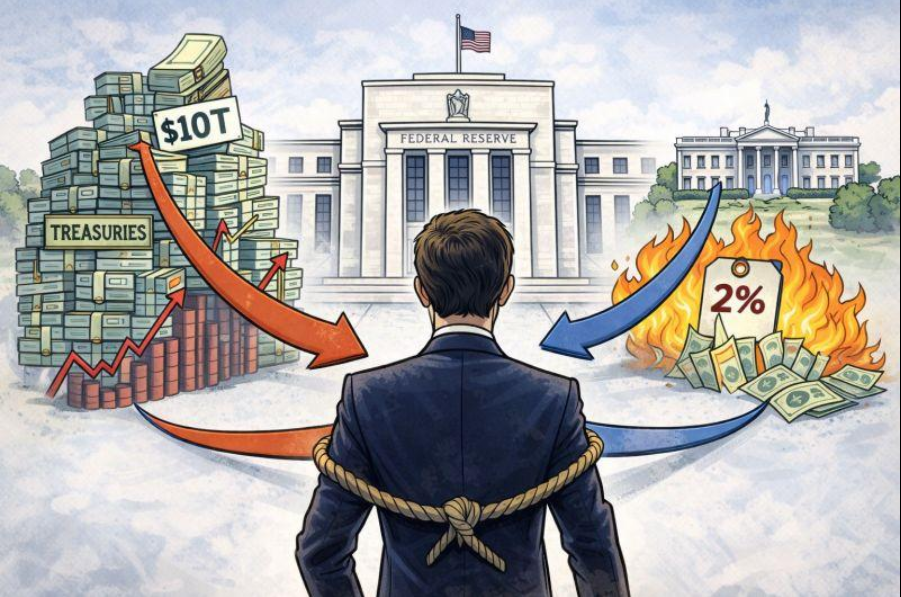
As interest rates have moved higher in recent years, the cost of servicing government debt has increased substantially.
Every additional dollar spent on interest payments is money that cannot be allocated toward infrastructure, education, healthcare, or national defense. If borrowing costs remain elevated, interest expenses could become one of the fastest-growing components of the federal budget over the coming decade.
For investors, this trend deserves close attention because it could influence future fiscal policy and economic growth.
Economic Growth Remains the Key Variable

Debt becomes more manageable when the economy grows faster than the cost of borrowing.
Higher productivity, innovation, business investment, and labor market expansion increase tax revenues while reducing the relative burden of outstanding debt. Conversely, slower economic growth combined with persistent deficits can accelerate debt accumulation and weaken fiscal sustainability.
Ultimately, the long-term outlook depends less on the size of today’s debt and more on the country’s ability to generate future economic growth.
What Investors Should Watch
Several indicators will help determine whether America’s fiscal trajectory remains sustainable:
- Federal budget deficits
- Treasury bond yields
- Interest payments as a share of federal spending
- GDP growth
- Inflation trends
- Credit rating developments
- Demand for U.S. Treasury securities
Monitoring these indicators provides valuable insight into both economic stability and financial market expectations.
Investment Implications

Persistent deficits do not necessarily imply weak investment returns, but they can influence asset prices, interest rates, and sector performance.
Higher government borrowing may support infrastructure, industrials, and defense-related industries, while sustained increases in Treasury yields can affect equity valuations, real estate, and borrowing costs across the economy.
Investors should focus on companies with strong balance sheets, healthy cash flows, and pricing power that can navigate periods of higher interest rates and fiscal uncertainty.
Outlook
The United States continues to benefit from deep capital markets, a resilient economy, and the global role of the U.S. dollar. These strengths provide significant flexibility that many countries lack.
However, deficits cannot expand indefinitely without consequences. Over time, policymakers may face increasingly difficult choices involving taxation, government spending, and fiscal reform. The challenge will be balancing economic growth with long-term debt sustainability.
Conclusion

America’s rising debt is not an immediate crisis, but it represents one of the most important structural challenges facing the economy over the coming decade.
The country’s ability to sustain higher deficits will depend on continued economic growth, investor confidence, and responsible fiscal management. For long-term investors, understanding the relationship between government debt, interest rates, and economic growth will remain essential in navigating future market cycles.