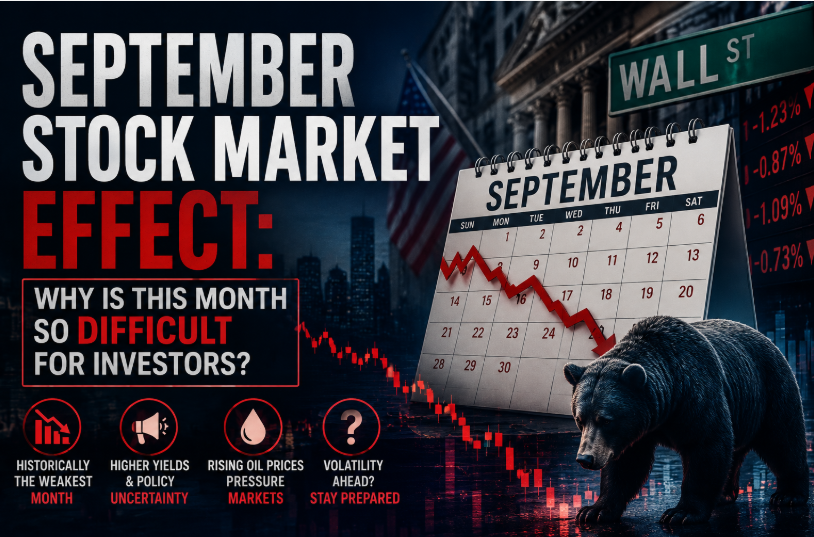
September Stock Market Effect: Why Is This Month So Difficult for Investors?
September Has a Bad Reputation
September has historically been the weakest month for U.S. stocks. Since 1928, the S&P 500 has averaged roughly a 1.1% decline in September, and it has finished lower more often than higher.
But seasonality is not a prediction. The bigger question for investors in September 2026 is whether historical weakness will collide with today’s higher oil prices, rising Treasury yields and uncertainty over Federal Reserve policy.
The Numbers Behind the “September Effect”
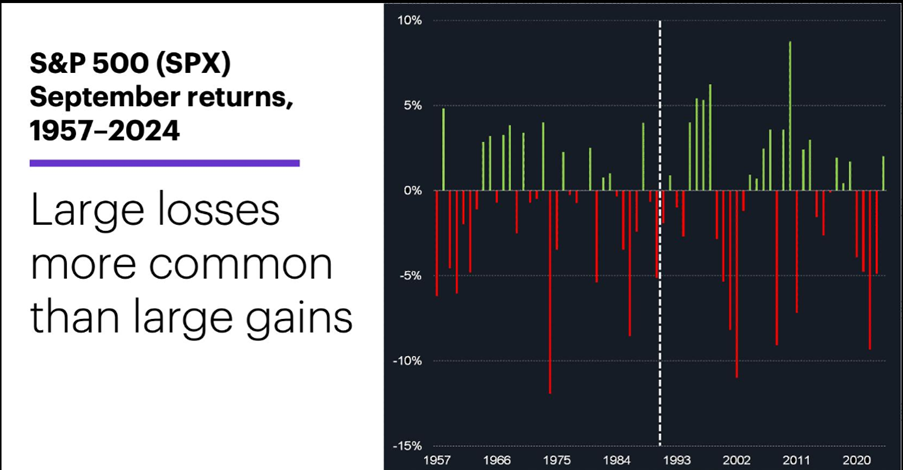
Historical data shows just how unusual September has been:
- S&P 500: average September return around -1.1%
- S&P 500: positive in only about 45% of Septembers
- Dow Jones: average September decline around -1.1%
- Nasdaq Composite: average September decline around -0.8%
September is therefore not just another month—it has one of the weakest seasonal records in the market.
Why Does September Tend to Be Weak?
There is no single proven explanation for the September effect. Researchers and market strategists point to several possible factors.
After the summer period, institutional investors return and may rebalance portfolios, lock in gains or adjust positions ahead of year-end.
Liquidity and investor positioning can also change quickly, while macroeconomic announcements can amplify existing market moves.
The important point is that seasonality itself is not a fundamental reason to sell stocks.
2026 Has an Additional Problem
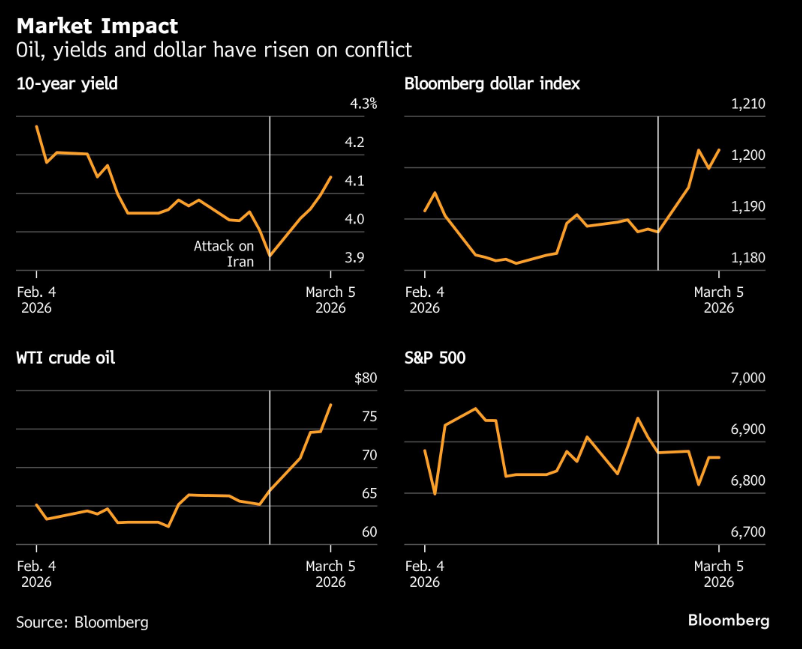
This September is entering with several additional sources of uncertainty.
On September 1, the S&P 500 fell 0.7%, while the Nasdaq dropped 1%, as rising oil prices and Treasury yields pressured equities. The 10-year Treasury yield climbed to around 4.79%.
Investors are also watching the Federal Reserve closely. Markets have recently increased the probability of a September rate hike, making upcoming inflation and employment data especially important.
But History Doesn’t Guarantee a Sell-Off
This is where investors need to be careful.
The S&P 500 entered September 2026 well above its 200-day moving average, a condition that historically has been associated with better September outcomes than when the index starts the month below that trend line.
The index also finished August near record highs after a strong summer rally.
So there is a genuine debate:
Will September repeat its historical weakness—or will strong market momentum override the seasonal pattern?
What Investors Should Watch
Rather than automatically selling because the calendar says September, investors should focus on the variables that can actually move markets:
Federal Reserve policy: A surprise rate increase could pressure valuations.
Inflation: Higher oil prices could make inflation harder to control.
Jobs data: A weakening labor market could raise recession concerns.
Treasury yields: Higher yields can make stocks less attractive relative to bonds.
Corporate earnings: Strong earnings could offset macroeconomic concerns.
Should Investors Sell in September?
Probably not simply because it is September.
Seasonality is a useful risk indicator, but it has limited predictive power on its own. J.P. Morgan Wealth Management specifically cautions that seasonal patterns can inform expectations but should not be treated as forecasts.
For long-term investors, reacting to one historically weak month can create a bigger problem: missing the recovery that may follow.
The Bigger Investment Question
September 2026 could be unusually interesting because the market is balancing strong equity momentum against rising macroeconomic risks.
If inflation falls and the Fed remains supportive, the historical September pattern could be overwhelmed by positive fundamentals.
But if oil prices remain elevated, Treasury yields continue rising and employment weakens, seasonal selling pressure could become much more significant.
Conclusion
September deserves attention—but not fear.
History shows that U.S. stocks have struggled more in September than in almost any other month. Yet the market does not follow a calendar with certainty.
For investors, the better strategy is to treat the September effect as a warning about potential volatility, not a signal to abandon equities.
The real test for September 2026 will be whether strong corporate earnings and market momentum can withstand higher yields, inflation pressure and changing Federal Reserve expectations.
In markets, history can provide a warning—but fundamentals ultimately decide the outcome.