America’s Infrastructure Gap: Who Will Pay for the Next Decade of Investment?
America’s Infrastructure Challenge
The United States has one of the world’s largest economies, yet much of its infrastructure is aging. Roads, bridges, airports, water systems, electricity networks, and public transit require significant investment to remain reliable and competitive.
The challenge is no longer simply identifying what needs to be rebuilt. The bigger question is who will pay for the massive investment required over the next decade?
The Cost of Doing Nothing

Delaying infrastructure investment can create costs that extend far beyond government budgets. Aging roads increase transportation costs, deteriorating water systems require expensive repairs, and unreliable power infrastructure can disrupt businesses and households.
For the U.S. economy, infrastructure is not simply a public-service issue—it is a productivity issue. Efficient transportation, reliable electricity, and modern communications networks are essential for long-term economic growth.
Government Funding Won’t Be Enough
Federal and state governments remain central to infrastructure spending, but public budgets face competing demands including healthcare, defense, Social Security, and interest payments on government debt.
That creates a difficult trade-off. Increasing infrastructure spending may support economic growth today, but financing it entirely through additional borrowing could add pressure to already stretched government finances.
The infrastructure question is therefore closely connected to America’s broader fiscal challenge.
Private Capital Could Play a Bigger Role

Private investors could become increasingly important in financing America’s infrastructure needs.
Pension funds, insurance companies, private equity firms, infrastructure funds, and other institutional investors have long sought assets capable of generating relatively stable long-term cash flows.
Toll roads, airports, energy infrastructure, utilities, telecommunications networks, and other projects can potentially attract private capital when the regulatory and financial structures are attractive.
Utilities and the Power Grid
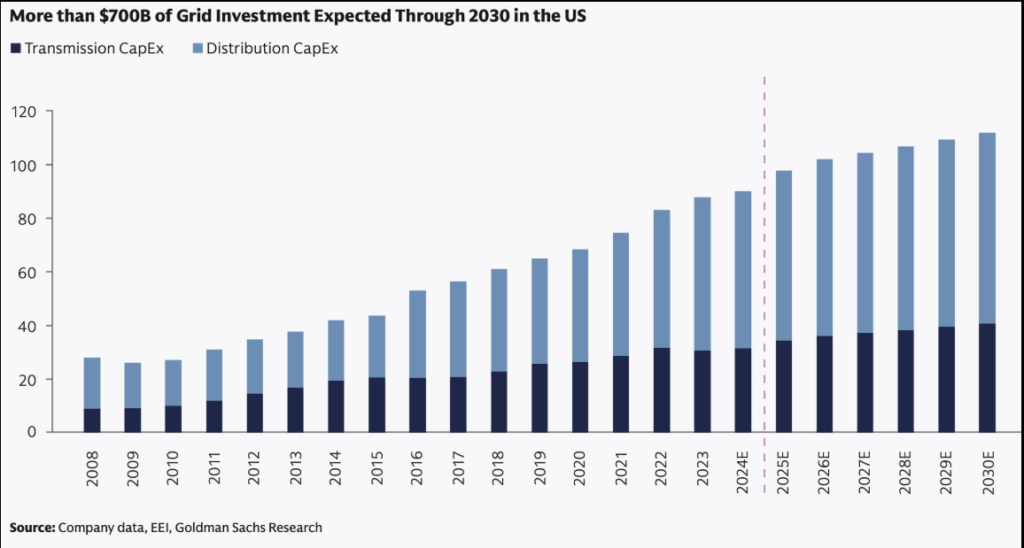
Electricity infrastructure could become one of the largest areas of investment.
Aging transmission networks, increasing electricity demand, and the need for greater grid reliability are creating pressure for additional generation and transmission capacity.
This could create opportunities across utilities, electrical equipment manufacturers, engineering companies, construction firms, and infrastructure developers.
Where Could the Investment Go?
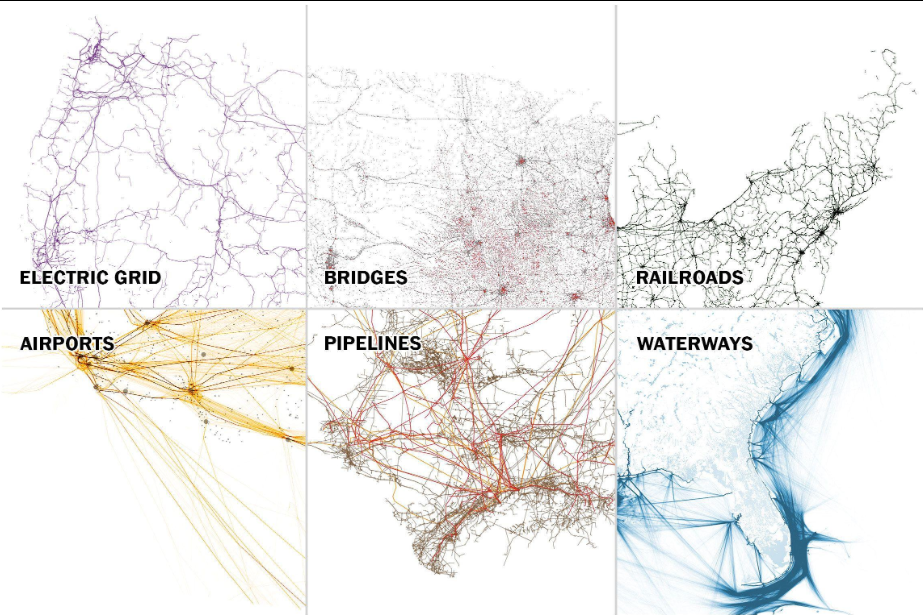
The opportunity extends across multiple sectors:
- Transportation: roads, bridges, railways, airports and ports
- Energy: transmission lines, substations and power generation
- Water: pipelines, treatment facilities and distribution systems
- Telecommunications: broadband and network infrastructure
- Construction: engineering, materials and heavy equipment
- Utilities: grid modernization and energy infrastructure
For investors, the infrastructure cycle could therefore create opportunities far beyond traditional construction companies.
The Investment Question
The infrastructure opportunity is substantial, but investors should not assume every infrastructure project will generate attractive returns.
Projects face permitting delays, rising construction costs, labor shortages, financing costs, regulatory uncertainty, and political risk. Companies with strong balance sheets, established contracts, pricing power, and proven project execution may be better positioned to benefit.
The key question is not simply how much America will spend, but who captures the economic value created by that spending.
Conclusion
America’s infrastructure gap represents both a major economic challenge and a long-term investment opportunity.
Government funding will remain essential, but private capital is likely to play an increasingly important role as the country faces competing fiscal priorities. Over the next decade, capital could flow toward transportation, utilities, energy networks, construction, engineering, and infrastructure-related industries.
For investors, America’s infrastructure rebuilding cycle may become one of the most important long-term themes of the U.S. economy—but identifying the companies capable of turning investment into sustainable cash flow will be the real opportunity.