How Artificial Intelligence Is Transforming the Global Economy
AI Is Reshaping the Global Economic Landscape
Artificial intelligence is no longer a niche technology—it has become one of the most significant drivers of economic transformation in the 21st century. Governments, corporations, and investors are allocating unprecedented levels of capital toward AI, recognizing its potential to reshape industries, improve productivity, and redefine global competitiveness.
From manufacturing and healthcare to finance and logistics, AI is becoming a fundamental component of business strategy rather than an optional technological upgrade.
The Productivity Revolution
One of AI’s greatest economic contributions is its ability to enhance productivity.
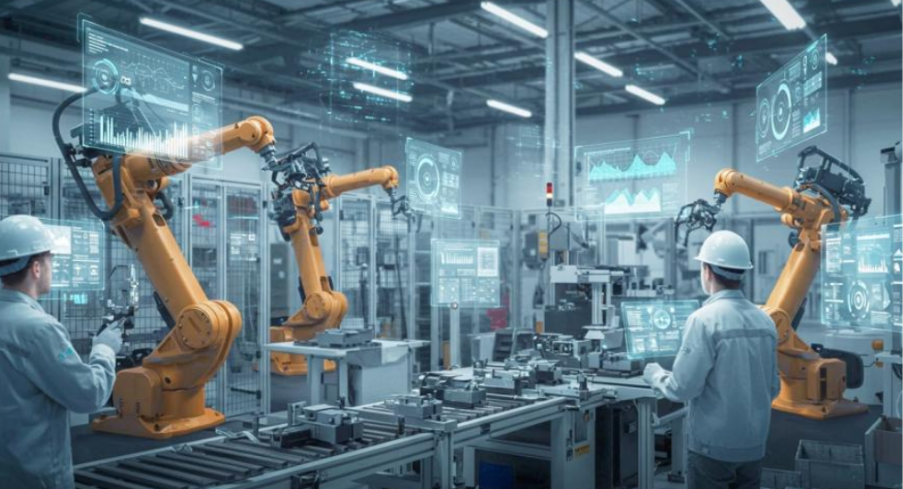
Businesses are increasingly using AI to automate repetitive tasks, optimize supply chains, improve customer service, and accelerate decision-making through advanced data analysis. These efficiency gains allow companies to reduce costs, improve operational performance, and allocate human capital toward higher-value activities.
Historically, productivity growth has been a major driver of long-term economic expansion, and AI has the potential to become one of its most powerful catalysts.
Investment Is Accelerating Worldwide
The rapid adoption of artificial intelligence has triggered one of the largest technology investment cycles in decades.
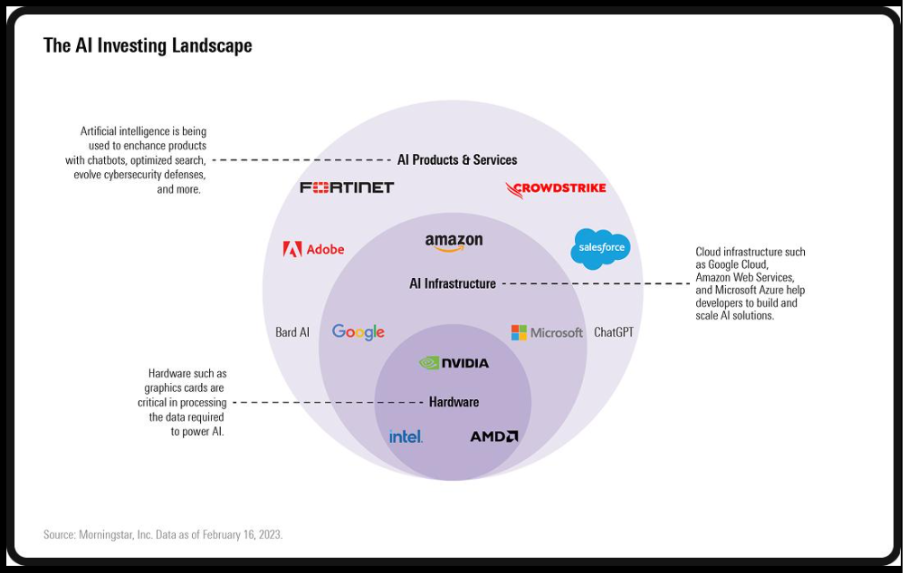
Global spending on AI infrastructure—including semiconductors, cloud computing, networking equipment, and hyperscale data centers—continues to rise as businesses race to build the computing capacity needed to support next-generation AI applications.
This investment wave is extending beyond technology companies, benefiting industrial manufacturers, utilities, construction firms, and infrastructure providers.

AI Is Transforming Every Industry
Artificial intelligence is creating opportunities across virtually every sector of the global economy.
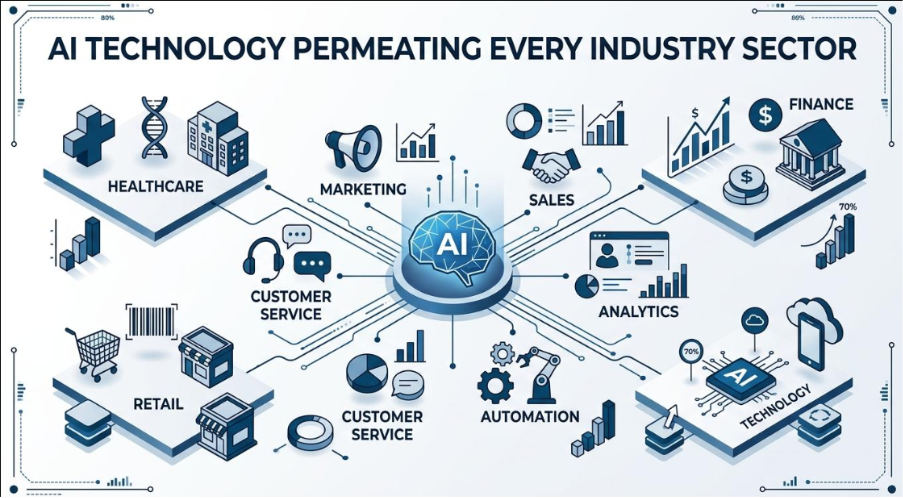
Healthcare providers are using AI to improve diagnostics and accelerate drug discovery. Financial institutions are enhancing fraud detection and risk management through machine learning. Manufacturers are deploying AI-powered robotics to improve efficiency, while retailers are leveraging predictive analytics to personalize customer experiences.
Rather than replacing entire industries, AI is fundamentally changing how businesses operate and compete.
Infrastructure Has Become a Strategic Asset
Behind every AI application lies a massive physical infrastructure.
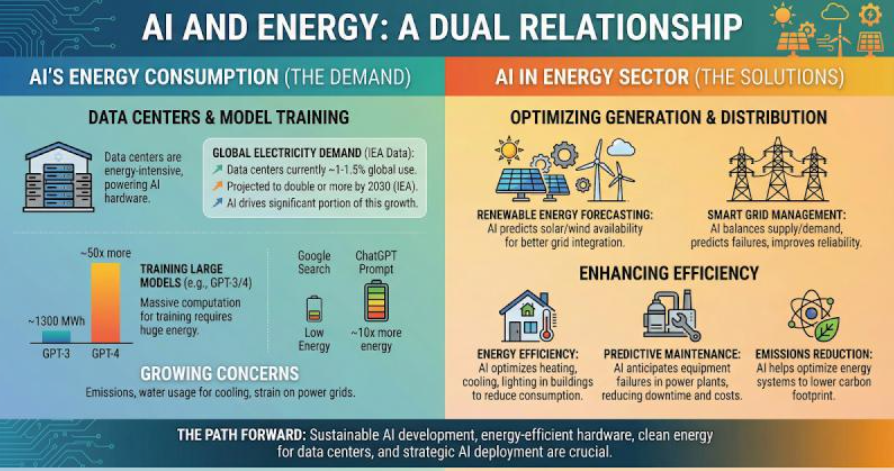
High-performance semiconductor manufacturing, cloud computing platforms, data centers, electricity generation, and high-speed communication networks have become essential components of the AI ecosystem. As demand for computing power continues to increase, investment in digital infrastructure is emerging as one of the defining economic themes of this decade.
The companies enabling AI may prove just as important as those developing the software itself.
Challenges Remain
Despite its enormous potential, AI presents significant challenges.
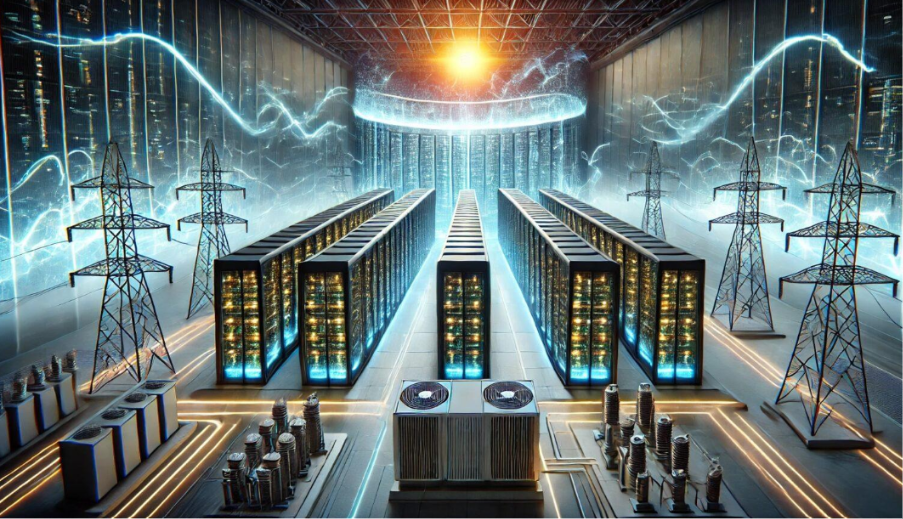
The rapid expansion of data centers is increasing electricity demand, while businesses continue to face high capital expenditure requirements to deploy AI technologies. Concerns surrounding cybersecurity, data privacy, workforce disruption, and evolving regulatory frameworks also remain central to the long-term development of the industry.
Successfully balancing innovation with responsible implementation will be critical to maximizing AI’s economic benefits.
What It Means for Investors
For investors, artificial intelligence represents more than a single investment theme—it is reshaping multiple industries simultaneously.
While semiconductor manufacturers and software developers remain at the forefront of the AI revolution, long-term opportunities are also emerging in cloud computing, cybersecurity, industrial automation, digital infrastructure, utilities, energy, and advanced manufacturing.
Diversified exposure across the broader AI ecosystem may provide more resilient long-term investment opportunities than focusing solely on a handful of technology leaders.
Conclusion
Artificial intelligence is transforming the global economy by improving productivity, accelerating innovation, and driving one of the largest infrastructure investment cycles in modern history.
Although challenges surrounding energy consumption, regulation, and valuation remain, AI’s long-term economic impact is expected to extend far beyond the technology sector.
For businesses, policymakers, and investors alike, the AI revolution is no longer a future possibility—it is actively reshaping the global economy today.