Critical Minerals: Why Governments Are Racing to Secure Supply
Introduction
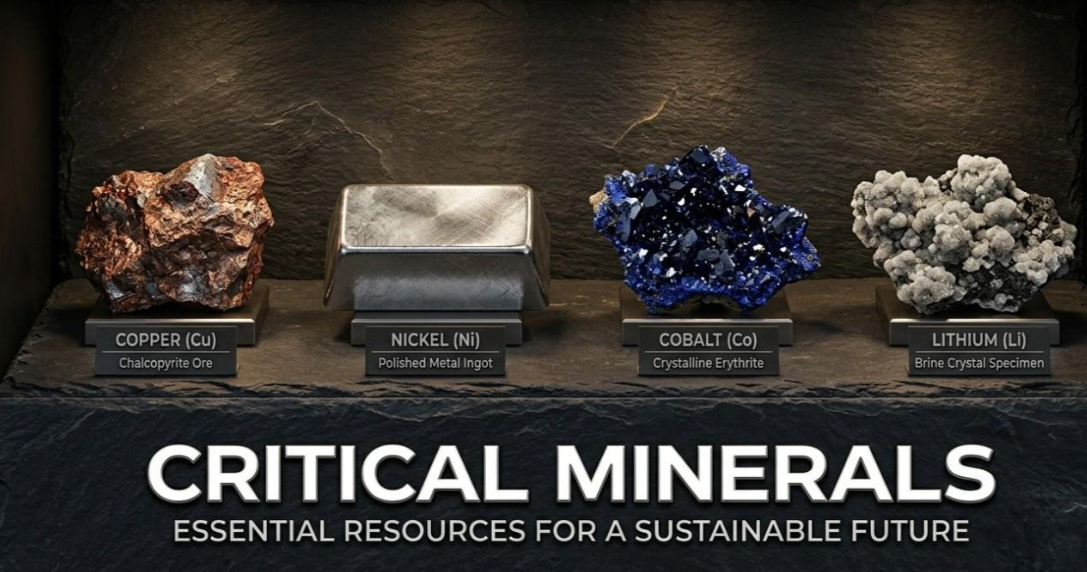
Critical minerals have become one of the world’s most strategic economic and geopolitical assets. Metals such as lithium, copper, nickel, cobalt, graphite, and rare earth elements are essential for electric vehicles, renewable energy systems, defense equipment, semiconductors, and modern industrial technologies.
As governments seek to strengthen supply chain resilience and reduce dependence on foreign producers, securing reliable access to these minerals has become a national priority rather than simply an economic objective.
Why Critical Minerals Matter
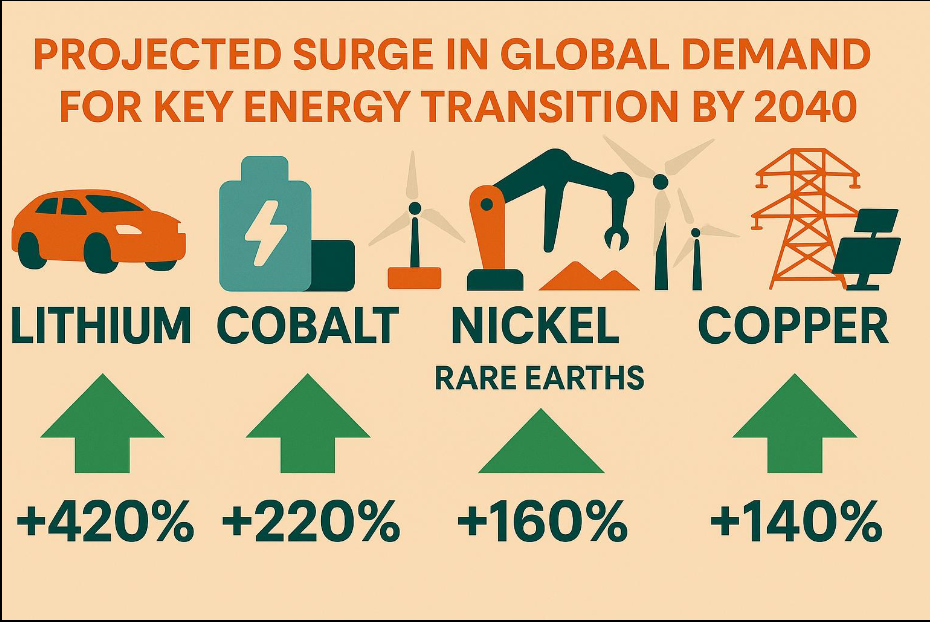
Critical minerals are the building blocks of modern industry. Copper powers electrical infrastructure, lithium and nickel support battery production, while rare earth elements are essential for advanced electronics, defense systems, and permanent magnets.
As global electrification accelerates, demand for these resources continues to grow across multiple industries.
Supply Chains Are Highly Concentrated
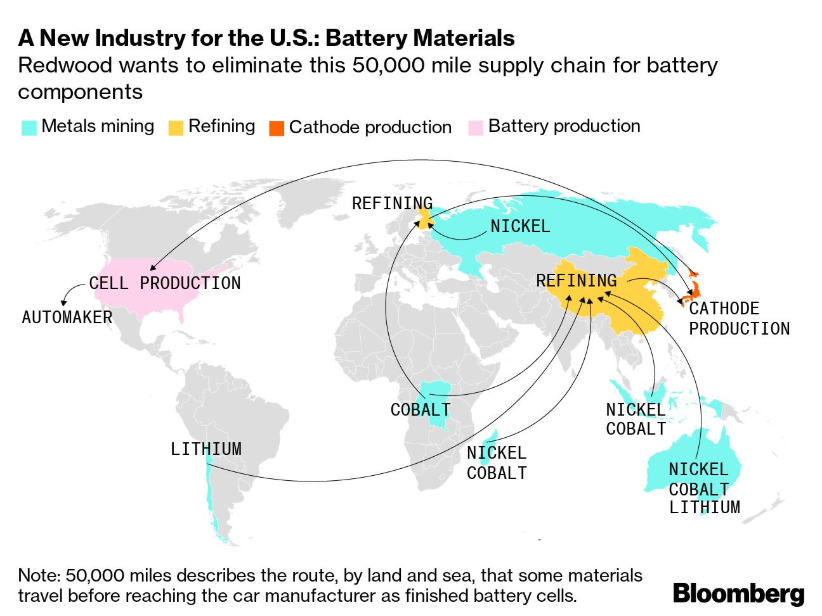
Although many countries possess mineral reserves, mining, refining, and processing remain concentrated in a limited number of regions.
China dominates much of the global refining capacity for rare earth elements and battery materials, while countries including Australia, Canada, Chile, Indonesia, and the Democratic Republic of the Congo play major roles in mineral extraction.
This concentration has encouraged governments to diversify supply sources and invest in domestic production.
Global Demand Is Rising
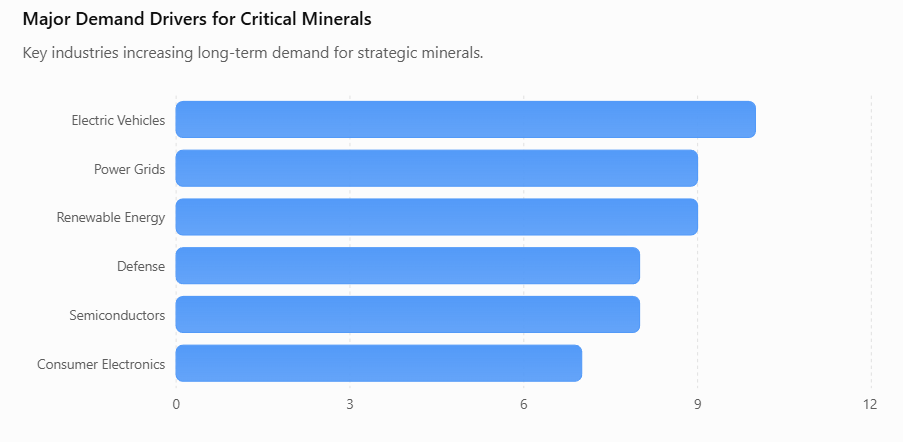
Governments expect demand for critical minerals to increase as countries modernize electricity grids, expand renewable energy generation, strengthen defense capabilities, and invest in advanced manufacturing.
This structural demand growth has encouraged both public and private investment throughout the mining value chain.
Governments Are Responding

The United States, Canada, Australia, the European Union, and several Asian economies have announced initiatives to accelerate domestic mining, expand refining capacity, streamline permitting, and strengthen partnerships with allied nations.
These policies aim to improve long-term resource security while reducing dependence on concentrated global supply chains.
Investment Opportunities
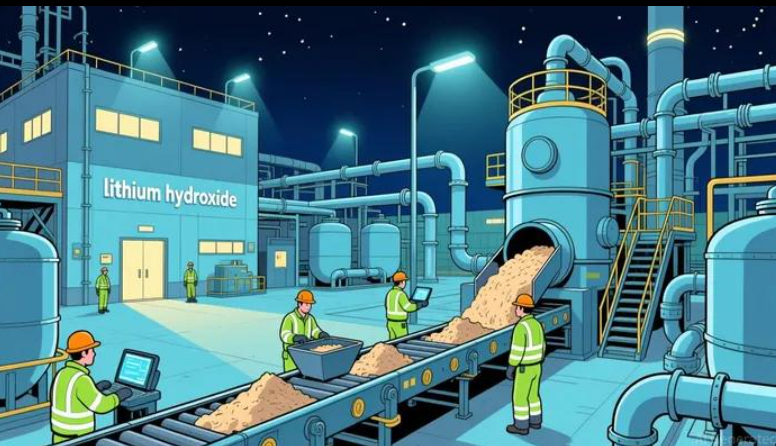
Investment opportunities extend beyond mining companies.
Equipment manufacturers, engineering firms, transportation providers, refining companies, infrastructure developers, and recycling businesses may all benefit from increased investment in critical mineral supply chains.
Investors should also recognize that commodity markets remain cyclical, making project quality, production costs, and balance sheet strength important factors when evaluating companies.
Challenges Ahead
Developing new mines often requires years of environmental reviews, infrastructure development, regulatory approvals, and significant capital investment.
Balancing economic development with environmental protection and community engagement remains one of the industry’s greatest challenges.
Successfully expanding supply will require cooperation between governments, industry participants, and local communities.
Conclusion
Critical minerals have become central to economic competitiveness, energy security, industrial development, and national defense.
As governments continue investing in domestic supply chains and strategic resource security, demand for these materials is expected to remain strong over the long term. While commodity prices may fluctuate, the global effort to secure critical minerals is increasingly viewed as a structural investment theme rather than a short-term market cycle.