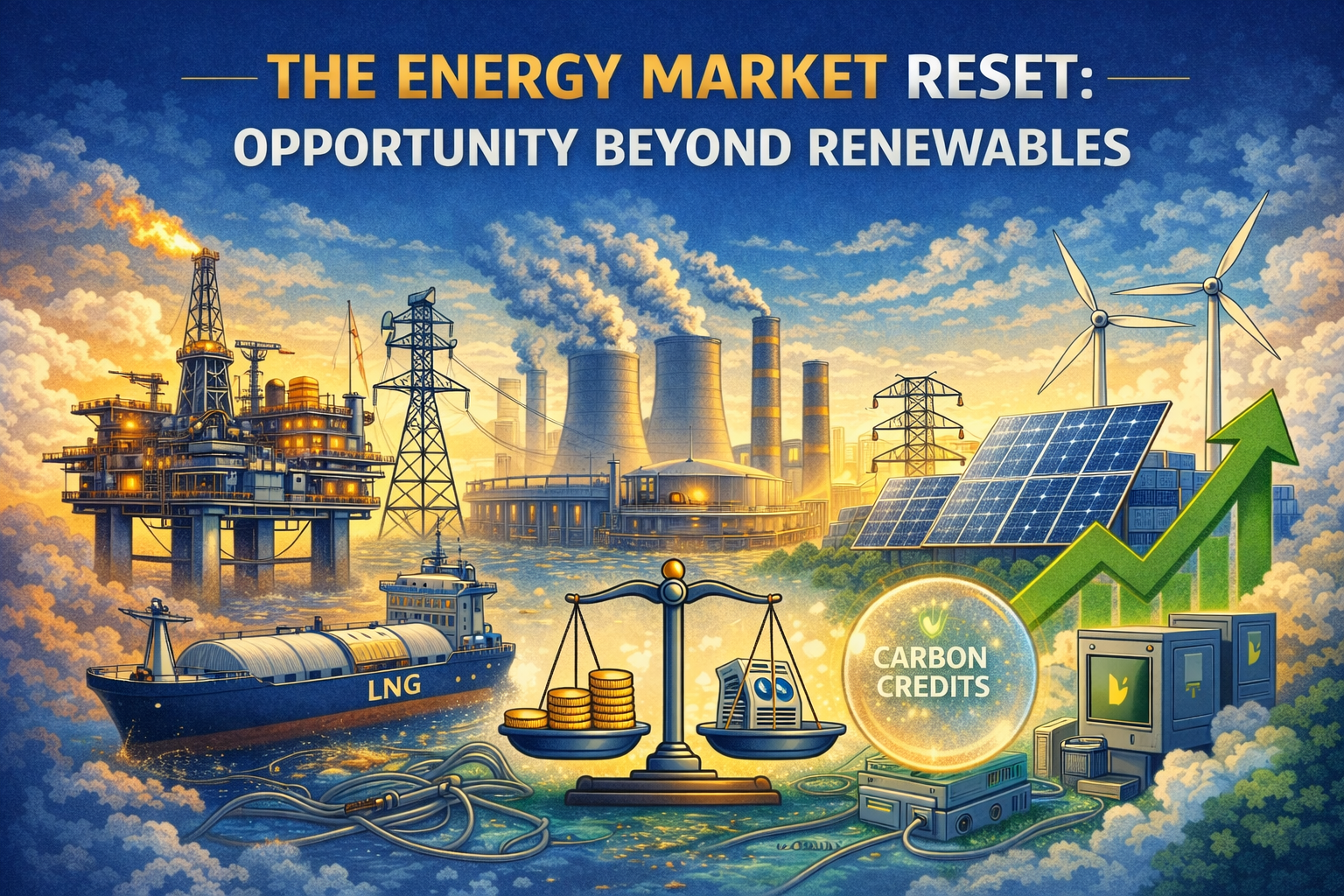
The Energy Market Reset: Opportunity Beyond Renewables
Introduction
The global energy landscape in 2026 is undergoing a structural reset. While renewable energy remains central to long-term decarbonization goals, capital markets are increasingly recognizing that opportunity extends beyond solar and wind.
The current phase reflects a broader rebalancing across traditional energy, natural gas, grid infrastructure, energy storage, and carbon markets. For investors, the question is no longer renewables versus fossil fuels — it is how the entire energy transition investment cycle is evolving.
Capital Discipline in Oil & Gas
After years of aggressive expansion, major oil and gas producers have adopted stricter capital allocation frameworks. Lower capex intensity and higher shareholder returns are reshaping the sector’s investment case.
Instead of pricing energy stocks purely on production growth, markets are focusing on:
- Free cash flow yield
- Dividend sustainability
- Balance sheet strength
- Commodity price sensitivity
In a volatile macro environment, disciplined energy producers may offer attractive risk-adjusted returns compared to more speculative growth sectors.
Natural Gas: The Transition Anchor
Natural gas continues to play a critical role in electricity generation, particularly as coal declines and renewable intermittency persists. It acts as a stabilizing force within the broader global energy transition.
Utilities and midstream operators tied to natural gas infrastructure may benefit from sustained demand growth while offering comparatively defensive earnings profiles.
Grid Infrastructure & Energy Storage
A scalable renewable ecosystem depends on modernized grids and efficient energy storage solutions. Increased investment in:
- Battery storage systems
- Transmission networks
- Smart grid technologies
- Energy management software
is creating long-duration growth opportunities within the energy infrastructure sector.
These segments often exhibit recurring revenue models and regulatory visibility, making them structurally different from commodity-driven businesses.
Carbon Markets & Policy Evolution
Carbon pricing mechanisms are maturing. Compliance markets, voluntary offsets, and corporate net-zero commitments are influencing capital flows across industries.
As regulatory clarity improves, carbon assets and environmental credit markets may become a more institutionalized component of diversified energy portfolios.
Investment Implications for 2026
The energy market reset highlights several themes:
- Capital discipline is replacing production expansion.
- Free cash flow metrics are gaining prominence.
- Infrastructure and storage investments are accelerating.
- Policy-driven carbon markets are becoming more investable.
Rather than viewing the sector through a binary lens, investors should evaluate where structural demand growth aligns with sustainable returns on capital.
Conclusion
The 2026 energy market reset reflects maturation, not retreat. Renewables remain essential, but opportunity now spans traditional hydrocarbons, natural gas, storage technologies, grid modernization, and carbon markets.
For equity investors, the most compelling opportunities may lie in identifying businesses that combine capital discipline, durable cash flows, and exposure to the evolving energy transition economy.