How Rising Oil Prices Drive Up the Cost of Essential Commodities
Introduction
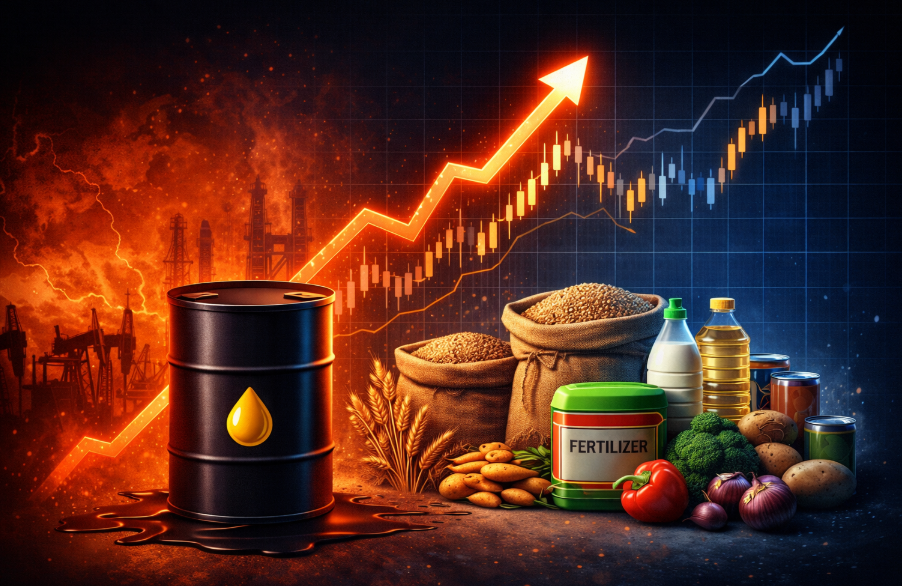
Oil is not just another commodity—it is the foundation of the global economic system. When oil prices rise, the impact extends far beyond energy markets, triggering a chain reaction that increases the cost of essential goods across the economy.
Understanding this transmission mechanism is critical for investors, businesses, and policymakers, as it explains why inflation often accelerates during periods of energy shocks.
Oil as the Core Input of the Global Economy
Oil influences nearly every stage of production and distribution:
- Transportation fuel (shipping, trucking, aviation)
- Industrial energy source (manufacturing, refining)
- Raw material (petrochemicals, plastics, fertilizers)
Because of this, a rise in oil prices effectively acts as a cost multiplier across sectors.
Transmission Channels: How Oil Impacts Essential Commodities
1. Transportation Costs → Higher Retail Prices
Most essential goods—food, medicines, consumer products—rely on complex supply chains.
- Higher fuel costs → Increased shipping and logistics expenses
- These costs are passed on to wholesalers and retailers
Result: Consumers pay more for everyday goods, even if production costs remain unchanged.
2. Agricultural Inflation (Food Prices Rise)
Oil plays a direct role in agriculture through:
- Diesel for farm machinery
- Fertilizers (derived from natural gas and petroleum products)
- Irrigation and food transportation
Impact:
- Higher input costs for farmers
- Increased prices for staples like wheat, rice, and vegetables
This is why food inflation often follows energy inflation.
3. Manufacturing Cost Pressure
Industries depend heavily on energy:
- Steel, cement, chemicals, and packaging all require fuel
- Petrochemicals are used in plastics, textiles, and consumer goods
Result:
- Rising production costs
- Companies either absorb margin pressure or pass costs to consumers
4. Currency and Import Inflation
For oil-importing countries:
- Higher oil prices increase the import bill
- This weakens the local currency
Secondary effect:
- Imported goods become more expensive
- Inflation spreads beyond energy into all essential imports
5. Inflation Expectations and Pricing Behavior
When oil prices rise:
- Businesses anticipate higher costs ahead
- They preemptively increase prices
This creates:
- A broader inflation cycle
- Price increases even in sectors not directly linked to oil
Why This Matters for Markets
Rising oil prices don’t just increase costs—they reshape the entire macro environment:
- Inflation rises → Reduces consumer purchasing power
- Central banks react → Delay rate cuts or tighten policy
- Corporate margins compress → Especially in non-energy sectors
This explains why equity markets often decline during oil shocks, even if demand remains stable.
Historical Perspective
Historically, oil price spikes have coincided with:
- Periods of elevated inflation
- Slower economic growth
- Increased market volatility
However, these effects are often cyclical rather than permanent, as high prices eventually:
- Reduce demand
- Encourage alternative supply
- Stabilize over time
Key Takeaways
- Oil acts as a universal input cost, impacting nearly all essential goods
- The effect is transmitted through transportation, production, agriculture, and currency channels
- Rising oil prices lead to broad-based inflation, not just higher fuel costs
- Markets react not only to current prices, but to future inflation expectations
Conclusion
“When oil prices rise, it is not just energy that becomes expensive—it is the entire cost structure of the economy that shifts upward.”
For investors, this underscores the importance of monitoring energy markets as a leading indicator of inflation, policy direction, and broader asset price movements.