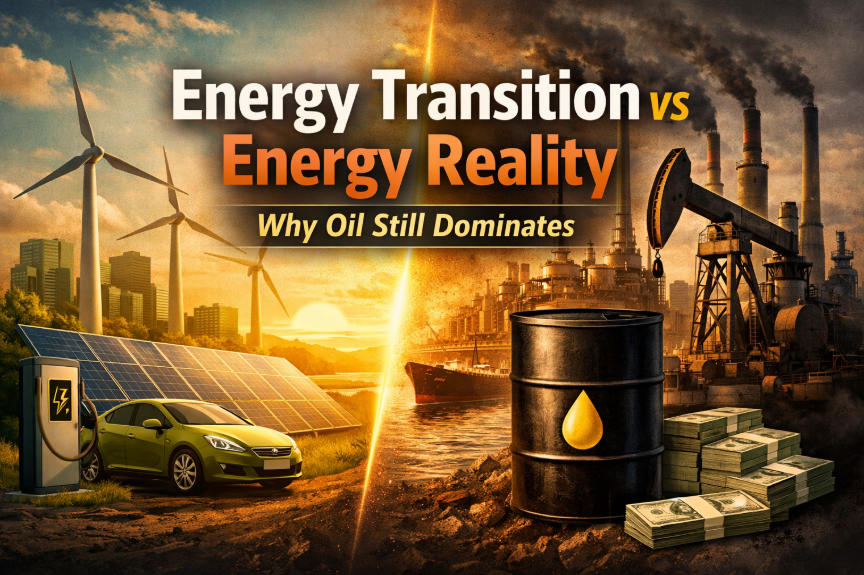
Energy Transition vs Energy Reality: Why Oil Still Dominates
Understanding the Gap Between Decarbonization Goals and Global Energy Dependence
Executive Summary
The global push toward renewable energy has accelerated significantly over the past decade. Governments are investing heavily in solar, wind, electric vehicles, and decarbonization strategies aimed at reducing fossil fuel dependence. Yet despite this transition, oil remains one of the most dominant and strategically important commodities in the global economy.
This raises an important question: If the world is moving toward clean energy, why does oil still continue to drive markets, inflation, and geopolitical strategy?
The answer lies in the difference between long-term transition ambitions and present-day energy infrastructure realities.
The Transition Narrative
Global climate commitments and policy frameworks have created strong momentum toward renewable energy adoption.
Key developments include:
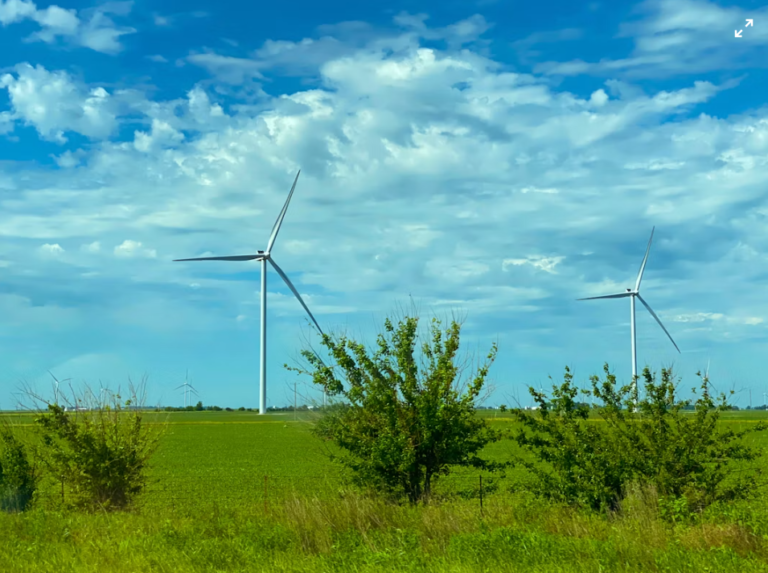
- Rapid growth in solar and wind capacity
- Expansion of electric vehicle adoption
- Increased investment in battery storage and grid modernization
- Strong regulatory pressure to reduce carbon emissions
These changes are real and significant. However, they do not automatically translate into an immediate decline in oil dependence.
Oil’s Structural Role in the Global Economy
Oil is not used primarily for electricity generation—the area where renewables are expanding fastest. Its dominance is strongest in sectors where alternatives remain limited:
Transportation
Heavy trucking, aviation, and shipping continue to rely overwhelmingly on liquid fuels.
Petrochemicals
Oil is a core input for plastics, chemicals, fertilizers, and industrial materials.
Industrial Systems
Many manufacturing and supply chain systems are still built around fossil-fuel-based infrastructure. This makes oil demand structurally resilient even as renewable capacity expands.
Emerging Markets and Demand Growth
A major reason oil demand remains strong is the continued growth of emerging economies. As incomes rise and industrialization accelerates across Asia, Africa, and parts of Latin America:
- Transportation demand increases
- Infrastructure development expands
- Energy consumption rises significantly
Even if developed economies reduce oil consumption, incremental demand from emerging markets continues to support global oil markets.
The Underinvestment Paradox
A less discussed but highly important issue is the decline in upstream oil investment. As ESG pressures and transition narratives discourage long-term fossil fuel investment:
- Exploration spending declines
- Supply capacity becomes tighter
- Spare production capacity falls
This creates a paradox:
Demand remains resilient while Future supply growth becomes more constrained. The result is greater price sensitivity and higher volatility when disruptions occur.
Why Markets Still React to Oil First
Oil remains central to inflation and macroeconomic policy. When oil prices rise:
- Transportation and fuel costs increase
- Inflation expectations rise
- Central banks face greater policy constraints
- Bond yields and equity markets react quickly
This is why oil continues to influence financial markets far beyond the energy sector. Renewables may shape the future, but oil still shapes the present.
Transition vs Replacement
A common misconception is that renewable growth automatically means fossil fuel decline. Historically, energy transitions tend to be additive rather than immediate replacements. Coal did not disappear when oil rose. Oil did not vanish when natural gas expanded. Instead, energy systems evolve gradually over decades, not quarters. This suggests the transition will be slower and more complex than many simplified narratives assume.
Conclusion
The renewable energy transition is real, necessary, and accelerating. However, the persistence of oil dominance reflects the realities of infrastructure, industrial dependence, and global demand patterns.
Oil remains deeply embedded in transportation, manufacturing, and macroeconomic stability. Until scalable alternatives fully penetrate these sectors, its influence will remain substantial.
The key takeaway is clear:
The world is transitioning toward cleaner energy—but it is still operating on oil.
Understanding this distinction is essential for investors, policymakers, and market participants navigating the next decade of global energy transformation.